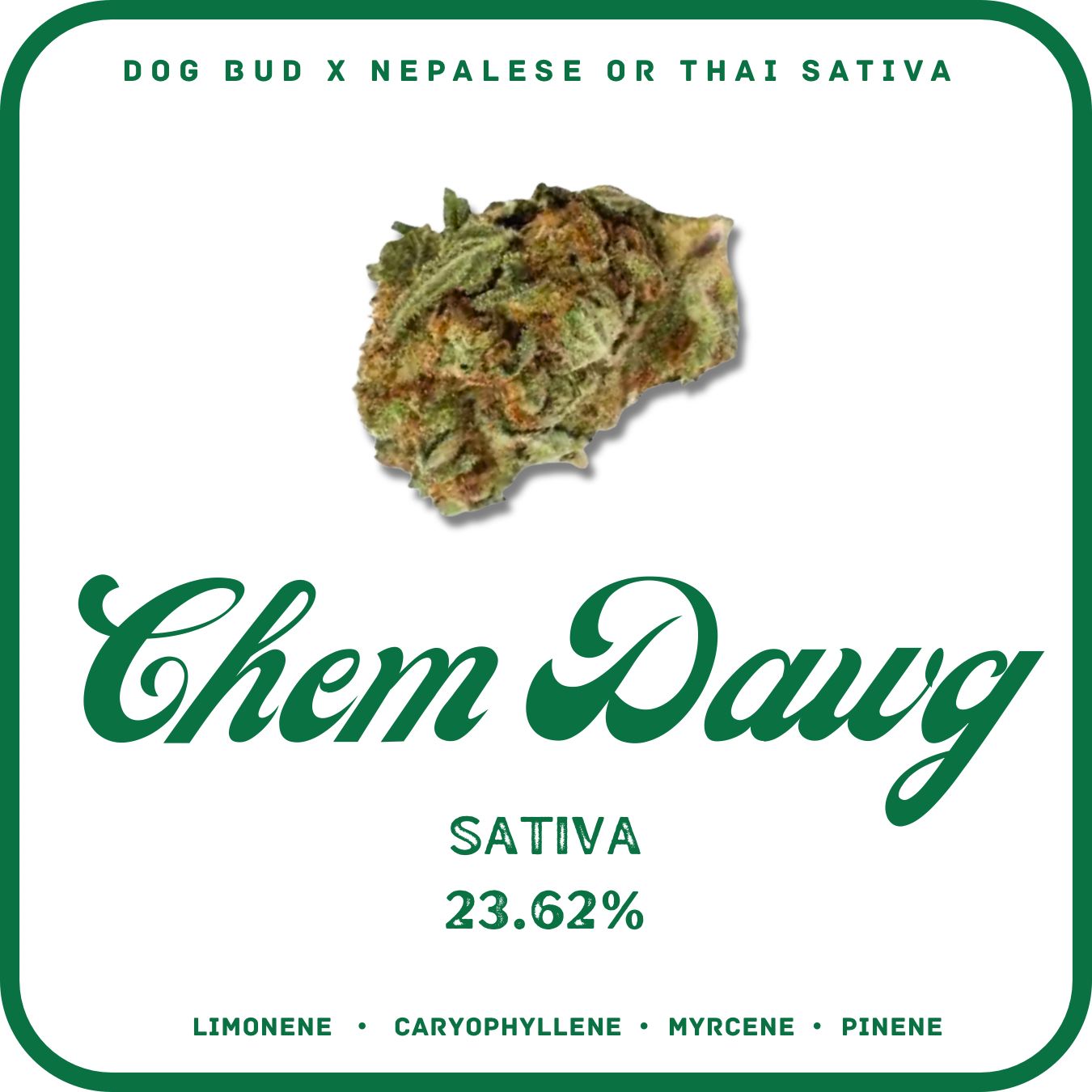
CHEM DAWG FLOWER- SATIVA 23.62%
$11.00
STYLE
Please choose
In stock: 5 available
Product Details
Brand: RELIABLE
Chem Dawg — General, Educational Overview
Lineage & Genetics
-
Origin: Chem Dawg (also spelled “Chemdawg”) emerged in the 1990s in the U.S. cannabis community and quickly became widely recognized for its potent profile.
-
Genetic Background: Chem Dawg is believed to be a cross between unknown OG Kush–type genetics and a later-discovered Nepalese or Thai sativa-leaning line. This admixture is why many descendants have a somewhat sativa-dominant influence.
-
Descendants: Chem Dawg is a parent to several well-known cultivars in cannabis culture, including Sour Diesel, Chemdog 91, and others in the “Chem” family. These offspring lines often inherit its distinct aroma and effects.
Typical Cannabinoid Profile
-
While the exact percentage can vary by grower, phenotype, and cultivation methods, Chem Dawg-type flowers are often reported in community sources to express moderate to high THC content in the 20–25% range in well-bred examples.
-
Cannabinoids like THC, CBD, and others occur in varying proportions depending on phenotype and cultivation.
Common Terpene Profile
Plants in the Chem Dawg family often exhibit a terpene mix that may include:
-
Myrcene — earthy, musky, sometimes herbal
-
Caryophyllene — spicy, peppery
-
Limonene — citrusy
-
Pinene — pine-like freshness
The exact terpene percentages vary widely from batch to batch and grower to grower.
Aroma & Flavor (Typical Descriptions)
People commonly describe Chem Dawg-type flower with:
-
Aroma: pungent, diesel-like funk with earthy and spicy notes
-
Flavor: a mix of diesel, pine, citrus, and herbal tastes on inhale and exhale
These sensory descriptions come from community reports and cultural discussion rather than standardized sensory testing.
Traditional / Historical Uses
-
Supporting a sense of uplifted mood or energy (often associated with sativa-leaning genetics)
-
Enhancing relaxation or stress relief
-
Helping with distraction from discomfort or tension
-
Supporting appetite stimulation
Save this product for later
CHEM DAWG FLOWER- SATIVA 23.62%
Powered by Lightspeed
Display prices in:USD